
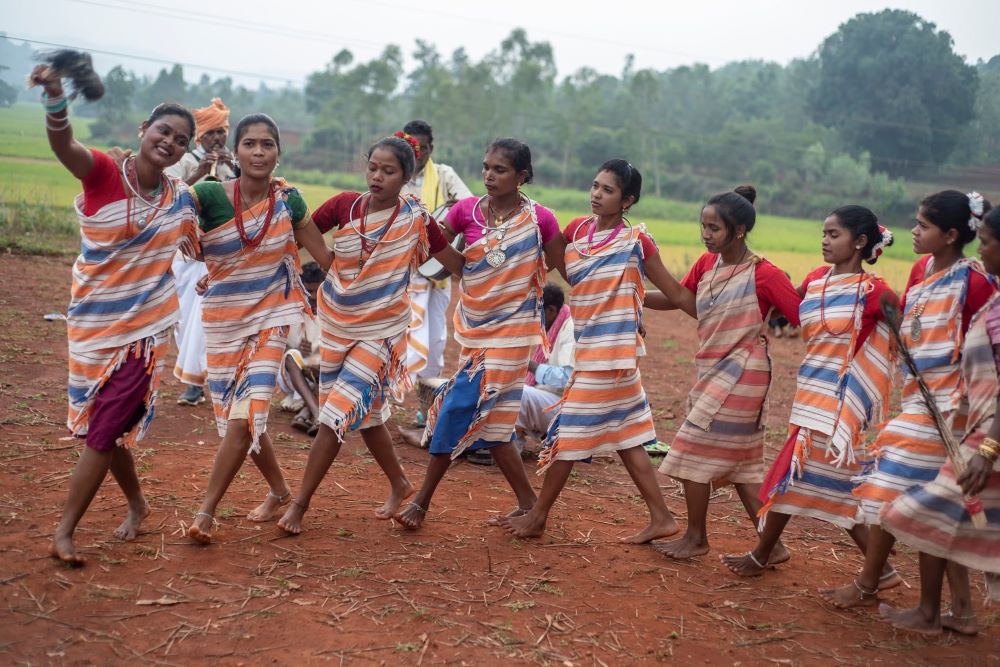
Odisha is home to a remarkable diversity of indigenous cultures, where festivals are closely connected with agriculture, nature, community life, spiritual beliefs and the changing seasons. Across the forested hills of Koraput, the Niyamgiri region of Rayagada, the Bonda cultural landscape of Malkangiri and the villages of Kandhamal, celebrations reflect traditions that have developed over generations.
The tribal festivals of Odisha are more than occasions for music, dancing and colourful clothing. They are important expressions of community identity, gratitude for harvests, relationships with ancestral landscapes and shared cultural memory.
From Chait Parab and Pus Parab to the cultural performances of Koraput Parab, these traditions reveal the diversity of Odisha’s indigenous heritage. Dance forms such as Dhemsa, traditional drums, songs and community gatherings often play important roles in celebrations.
However, festivals differ between communities and villages. Not every ceremony is public, and visitors should never assume that a sacred celebration is open to photography or tourism.
In this guide, discover the major tribal festivals and cultural celebrations of Odisha, their significance, traditional dance and music, and how to experience the state’s living heritage respectfully.
Why Are Tribal Festivals Important in Odisha?
For many indigenous communities in Odisha, festivals are closely connected with the rhythms of everyday life.
Agricultural seasons, the arrival of new crops, community well-being, ancestral traditions and relationships with local deities or sacred landscapes may all influence the timing and meaning of celebrations.
Festivals can provide opportunities for families and neighbours to gather, renew relationships, perform traditional music and dance, share food and participate in community rituals.
Yet there is no single festival tradition shared identically by all of Odisha’s tribes.
The Bonda, Gadaba, Paraja, Dongria Kondh, Saora, Juang, Santal and other communities have distinct cultural practices. Even within one community, celebrations can vary from village to village.
Understanding these differences is essential to appreciating the richness of Odisha tribal culture.
Explore: Tribal Culture of Odisha
Major Tribal Festivals of Odisha
1. Chait Parab – Spring and Community Celebrations
Chait Parab, also written Chaita Parab, is an important seasonal celebration among several indigenous communities of southern Odisha.
It is associated with the Chaitra period, generally falling around March and April, although dates and observances differ by community.
For some communities, the festival is connected with agricultural cycles, community worship, seasonal renewal and gatherings.
Traditional songs, dancing and shared meals may accompany local celebrations.
Among the Gadaba, Chait Parab is one of the recorded seasonal festivals. Bonda communities also observe festivals known by this name, although their particular rituals and meanings should not be assumed to be identical.
For cultural travellers, Chait Parab illustrates how seasonal celebrations remain connected with the agricultural and social life of southern Odisha.
Cultural regions: Koraput, Malkangiri and other areas, depending on the community.
Typical season: March–April, subject to local calendars.
Read: Gadaba Tribe of Odisha
2. Pus Parab – Seasonal Traditions and Community Life
Pus Parab, also called Puss or Poush Parab in different contexts, is another seasonal festival associated with communities in southern Odisha.
The name is linked with the Pousha period of the traditional calendar, generally around December and January.
Among communities such as the Gadaba and Bonda, festivals with this name form part of their traditional ritual calendars.
Observances can involve community gatherings, worship and seasonal traditions, but specific practices differ between communities.
Travellers should avoid assuming that Pus Parab is a single standardized public event.
Its importance lies in the way local communities maintain their own ceremonial calendars and shared traditions.
Cultural regions: Parts of Koraput and Malkangiri.
Typical season: December–January, varying locally.
Discover: Bonda Tribe of Odisha
3. Koraput Parab – A Celebration of Tribal Art and Culture
One of the most accessible cultural events for visitors interested in the traditions of southern Odisha is Koraput Parab.
Unlike village-specific religious festivals, Koraput Parab is an organized cultural festival that brings together performances, crafts and other expressions of regional heritage.
The event provides a platform for indigenous communities and local artists to present traditional dances, music, handicrafts, textiles and cultural practices.
Visitors may encounter performances representing the cultural diversity of communities such as the Gadaba, Paraja and Kondh.
Cultural exhibitions and craft displays can also introduce travellers to regional weaving, local products and artistic traditions.
Koraput Parab is particularly useful for travellers who want to experience public cultural performances without entering private community ceremonies.
However, festival dates, venues and programmes can change from year to year.
Location: Koraput district.
Best for: Public cultural performances, traditional crafts, regional music and dance.
Explore: Koraput Tribal Tourism
4. Karama Festival – Nature, Community and Traditional Dance
Karama, also written Karam, is an important festival among several indigenous communities of eastern and central India, including the Santal and other communities present in Odisha.
The celebration is associated with the Karam tradition, community well-being, nature and agricultural life.
Songs and group dancing form an important part of festivities in many places.
The festival is especially relevant when exploring the cultural heritage of northern and western Odisha.
As with other indigenous celebrations, the timing, rituals and participation vary according to the community and locality.
Cultural regions: Parts of northern and western Odisha.
Typical season: Often around August–September, depending on the local calendar.
5. Sohrai and Related Harvest Celebrations
Sohrai, also written Saharai in some community contexts, is associated with harvest and agricultural traditions among Santal communities and others in eastern India.
Such celebrations express the importance of agriculture, livestock, household life and community relationships.
Traditional songs, dances and gatherings may accompany local observances.
For travellers, Sohrai demonstrates that indigenous festivals are not limited to the tribal regions of Koraput and Rayagada.
Northern Odisha, including the wider Mayurbhanj region, has its own distinctive cultural heritage.
Cultural region: Santal communities in northern Odisha and neighbouring regions.
Season: Varies by community and local calendar.
6. Nuakhai – The New Harvest Celebration of Western Odisha
Nuakhai is one of western Odisha’s most important agricultural festivals.
The celebration centres on welcoming the new harvest, offering the first grains according to local traditions and sharing food with family and community members.
Nuakhai is a broader regional festival rather than a ceremony exclusive to one tribe. Nevertheless, it provides valuable insight into the agricultural heritage and cultural diversity of western Odisha.
The occasion is associated with family gatherings, traditional food, cultural performances and a strong sense of community belonging.
Travellers exploring western Odisha during Nuakhai may encounter a festive atmosphere, but private household rituals should always be respected.
Region: Western Odisha.
Typical season: Around August–September, with dates varying annually.
Tribal Dance Traditions of Odisha
Dance is one of the most recognizable expressions of Odisha’s indigenous and regional cultural heritage.
But traditional dances are not simply entertainment.
Depending on the community and occasion, they may express celebration, collective identity, seasonal change, social relationships or spiritual meaning.
Dhemsa Dance – A Cultural Tradition of Southern Odisha
Dhemsa is a well-known group dance tradition associated with communities of southern Odisha, including the Gadaba and other communities in the Koraput region.
Performers may dance in coordinated formations, often moving rhythmically to traditional music.
Dhemsa is an important part of the region’s cultural identity and may be performed during suitable community occasions and public cultural programmes.
For visitors, an appropriately organized performance can provide an introduction to southern Odisha’s dance heritage.
However, a cultural performance arranged for visitors should not automatically be described as a sacred village ritual.
Discover: Gadaba Tribe of Odisha
Chhau Dance – Martial Movements and Regional Heritage
Mayurbhanj Chhau is one of Odisha’s celebrated regional dance traditions.
Known for energetic movement and martial influences, it is associated with the cultural heritage of Mayurbhanj and is performed at cultural events and festivals.
It is important to distinguish Chhau from the community-specific ceremonial dances of southern Odisha.
Chhau belongs to a wider regional performing-arts tradition and should not be presented as the dance of every tribal community in Odisha.
Ghumura Dance – The Rhythms of Kalahandi
Ghumura is a prominent folk performance tradition associated with Kalahandi.
It is known for energetic rhythmic movements and distinctive percussion.
Although not exclusive to tribal communities, Ghumura forms an important part of the broader cultural landscape of western and southern Odisha.
Together, Dhemsa, Chhau and Ghumura illustrate the diversity of Odisha’s regional performing arts.
Traditional Tribal Music and Instruments
Music accompanies many community celebrations, social gatherings and dance traditions across Odisha.
Traditional musical expressions vary considerably between communities.
Drums and other percussion instruments frequently provide the rhythm for group dancing. Flutes, singing and locally distinctive instruments also feature in different cultural traditions.
Drums and Rhythm
Percussion helps coordinate movement during many group dances.
Rhythmic patterns may vary according to the dance, community and occasion.
Traditional Songs
Songs may preserve community memory, seasonal themes, relationships, agricultural experiences and local stories.
The language and meaning of these songs are important parts of their cultural value.
Music as a Shared Experience
During community celebrations, music can bring participants together across generations.
Travellers should remember that a musical performance may be part of a private or meaningful social occasion rather than an invitation for unrestricted recording.
How Tribal Festivals Connect with Agriculture and Nature
Many indigenous celebrations in Odisha are linked with agricultural seasons and the natural environment.
This connection can be understood through three recurring themes.
Harvest and Gratitude
Agricultural festivals may express gratitude for crops and the well-being of households and communities.
Seasonal Renewal
Spring and other seasonal transitions provide occasions for rituals, gatherings and renewed community relationships.
Sacred Landscapes
For some communities, hills, forests, streams and other natural features hold spiritual significance.
The Dongria Kondh relationship with the Niyamgiri Hills is one example of how cultural identity and landscape are deeply connected.
These relationships should be understood on their own terms rather than reduced to a single generalized explanation of tribal spirituality.
Read: Niyamgiri Hills Travel Guide
Where Can Travellers Experience Tribal Festivals in Odisha?
Different parts of Odisha offer different opportunities for cultural travel.
Koraput
Koraput is one of the most rewarding regions for exploring southern Odisha’s indigenous heritage.
The district is associated with communities such as the Gadaba and Paraja and is known for traditional villages, regional markets, textile heritage and cultural events such as Koraput Parab.
Explore: Koraput Tribal Tourism
Rayagada and Niyamgiri
Rayagada provides access to the wider Niyamgiri cultural landscape associated with the Dongria Kondh.
Visitors should distinguish between publicly accessible cultural experiences and private community ceremonies.
Explore: Rayagada Tribal Tourism
Malkangiri
Malkangiri is associated with the Bonda and other indigenous communities.
Cultural experiences in remote areas require careful planning, appropriate local guidance and respect for access conditions.
Explore: Malkangiri Tribal Tourism
Kandhamal
Kandhamal is known for its forested landscapes and the cultural traditions of Kondh communities, including Kutia Kondh cultural regions.
Seasonal celebrations differ between communities and villages.
Explore: Kandhamal Tribal Tourism
Mayurbhanj and Northern Odisha
Northern Odisha offers additional cultural traditions, including Santal festivals and the regional heritage of Mayurbhanj Chhau.
This makes northern Odisha a valuable area for travellers interested in the wider diversity of indigenous and folk cultures.
Best Time to Experience Tribal Festivals in Odisha
There is no single festival season covering every indigenous community.
Different celebrations follow agricultural cycles, traditional calendars and local community practices.
The following table provides a general planning overview.
| Festival or Celebration | General Period | Cultural Context |
|---|---|---|
| Chait Parab | March–April | Seasonal celebrations among several communities |
| Pus Parab | December–January | Traditional seasonal rituals in parts of southern Odisha |
| Koraput Parab | Dates announced annually | Public cultural festival in Koraput |
| Karama | Often August–September | Community and nature-related traditions |
| Sohrai/Saharai | Varies locally | Harvest and agricultural traditions |
| Nuakhai | Usually August–September | New-harvest celebration in western Odisha |
These are indicative periods, not confirmed dates for a particular year or village.
Important: If you want to plan a tour around a festival, confirm the exact event, community, location, public access and dates before booking your travel.
Read: Best Time for Odisha Tribal Tourism
Tribal Festivals vs Weekly Tribal Markets: What Is the Difference?
Travellers sometimes confuse traditional festivals with weekly tribal markets, but they serve different purposes.
Tribal Festivals
Festivals may involve seasonal rituals, community gatherings, cultural performances, worship, music, dance and shared meals.
Some celebrations are private, while others include public cultural programmes.
Weekly Tribal Markets
Weekly markets are regular trading places where residents gather to buy and sell agricultural produce, forest products and everyday goods.
The three well known markets frequently included in southern Odisha tribal itineraries are:
Wednesday – Chatikona
Thursday – Onukadelli
Friday – Kunduli
Unlike festivals, these markets operate on recurring weekly schedules, although local arrangements should always be reconfirmed.
For visitors who cannot align their journey with a festival, the weekly market circuit offers another opportunity to learn about rural life and regional cultural diversity.
Read: Odisha’s 3-Market Tribal Circuit
How to Experience Tribal Festivals Responsibly
Responsible travel is particularly important when visiting indigenous cultural celebrations.
1. Understand Whether the Event Is Public
A district cultural festival is different from a private village ceremony.
Do not assume that all rituals are open to visitors.
2. Seek Appropriate Permission
If an event takes place within a village or community space, follow local guidance and obtain appropriate permission before attending.
3. Ask Before Photographing People
Permission to attend a celebration does not automatically include permission to photograph every participant.
4. Respect Sacred Ceremonies
Some rituals may have restrictions on visitors, photography or participation.
Respect those boundaries without argument.
5. Avoid Disrupting Performances
Do not interrupt songs, dances or ceremonies to arrange photographs.
6. Support Local Communities
When appropriate, purchase genuine local handicrafts and support local businesses.
7. Avoid Staged Representations
Do not ask community members to recreate sacred rituals solely for tourism.
A meaningful cultural experience comes from understanding traditions respectfully, not manufacturing performances for photographs.
Read: Responsible Tribal Tourism in Odisha
Can You Include a Tribal Festival in an Odisha Tour?
Yes, where an appropriate public event or community-approved experience is available during your travel dates.
However, festival attendance should be treated as a date-dependent opportunity, not a guaranteed inclusion in every tribal tour package.
For travellers particularly interested in dance, music and cultural performances, public events such as Koraput Parab may be a practical option.
For village-based celebrations, availability depends on local calendars, community preferences and access arrangements.
A private itinerary can also combine cultural destinations and weekly markets even when no suitable festival is taking place.
Explore: Odisha Tribal Tour Packages
Suggested Cultural Journey Through Southern Odisha
A well-planned cultural tour can combine the following destinations and experiences:
Bhubaneswar → Rayagada → Chatikona → Jeypore → Onukadelli → Gadaba Village Region → Kunduli → Koraput
Depending on travel dates and local arrangements, the journey may include an appropriate public cultural event.
Rayagada and Niyamgiri
Learn about the wider Dongria Kondh cultural landscape and visit Chatikona market on the appropriate day.
Jeypore and Onukadelli
Experience the Onukadelli weekly market and learn about the cultural diversity of the surrounding region.
Koraput and Gadaba Cultural Region
Explore regional traditions, villages and local crafts, with the possibility of a public cultural performance if available.
Extend the Journey
Travellers with additional time can include Kandhamal, other parts of southern Odisha or Odisha’s coastal heritage destinations.
Explore: Odisha Tribal Market Tour
Explore: Odisha Tribal Travel Guide
Why Tribal Festivals Matter for Odisha’s Cultural Heritage
Festivals help preserve and renew cultural knowledge.
Traditional songs, dances, languages, ceremonies and community gatherings connect people with shared histories and local identities.
At the same time, these traditions are not frozen in the past.
Communities continue to adapt, interpret and celebrate their heritage in contemporary ways.
Responsible cultural tourism should recognize this living character.
Rather than presenting indigenous communities as museum exhibits, travellers should appreciate their continuing cultural creativity, autonomy and traditions.
Understanding this distinction makes a journey through tribal Odisha more meaningful.
Plan a Cultural Journey with Odisha Tribal Trails
The tribal festivals of Odisha offer a window into the state’s rich indigenous heritage, from seasonal celebrations and traditional music to community dances and public cultural events.
But the most rewarding journeys are those planned with cultural sensitivity, realistic expectations and respect for local traditions.
At Odisha Tribal Trails, we organize private and customizable journeys through Koraput, Rayagada, Malkangiri, Kandhamal and other cultural regions of southern Odisha.
Our itineraries can include traditional villages, weekly markets, cultural landscapes, local crafts and suitable public cultural events when dates and arrangements permit.
Whether you are interested in Dhemsa dance, regional festivals or the broader cultural heritage of Odisha, we can help you plan a meaningful journey.
Explore Odisha Tribal Tour Packages
Frequently Asked Questions About Tribal Festivals of Odisha
What are the major tribal festivals of Odisha?
Important celebrations include Chait Parab, Pus Parab, Karama and Sohrai/Saharai among different indigenous communities. Koraput Parab is also an important public cultural festival showcasing the heritage of southern Odisha.
What is Chait Parab?
Chait Parab is a seasonal festival observed by several communities in Odisha, with traditions that vary by community and locality. It is generally associated with the Chaitra period around March–April.
What is Koraput Parab?
Koraput Parab is an organized cultural festival celebrating the music, dance, handicrafts and regional heritage of southern Odisha.
What is Dhemsa dance?
Dhemsa is a traditional group dance associated with communities of southern Odisha, including the Gadaba and others in the Koraput region.
Which tribal festivals are connected with agriculture?
Many indigenous celebrations are connected with agricultural seasons. Examples include Chait Parab, Pus Parab and harvest-related traditions such as Sohrai. Nuakhai is an important broader regional harvest festival in western Odisha.
When is the best time to see tribal festivals in Odisha?
There is no single best month. Different festivals take place according to local community calendars, agricultural seasons and annual event schedules.
Can tourists attend tribal festivals in Odisha?
Some public cultural festivals welcome visitors. Private community ceremonies may have restrictions or require appropriate invitations and permission.
Can I photograph tribal dances and festivals?
Photography depends on the event and the consent of participants. Always follow local guidance and respect restrictions.
Can I combine tribal festivals with weekly markets?
Yes, depending on dates. A cultural tour may include Chatikona, Onukadelli and Kunduli weekly markets along with suitable public festivals or performances when available.
Which part of Odisha is best for tribal cultural tourism?
Koraput and Rayagada are particularly useful for southern Odisha cultural itineraries. Malkangiri, Kandhamal, Mayurbhanj and other regions also have distinctive indigenous traditions.