
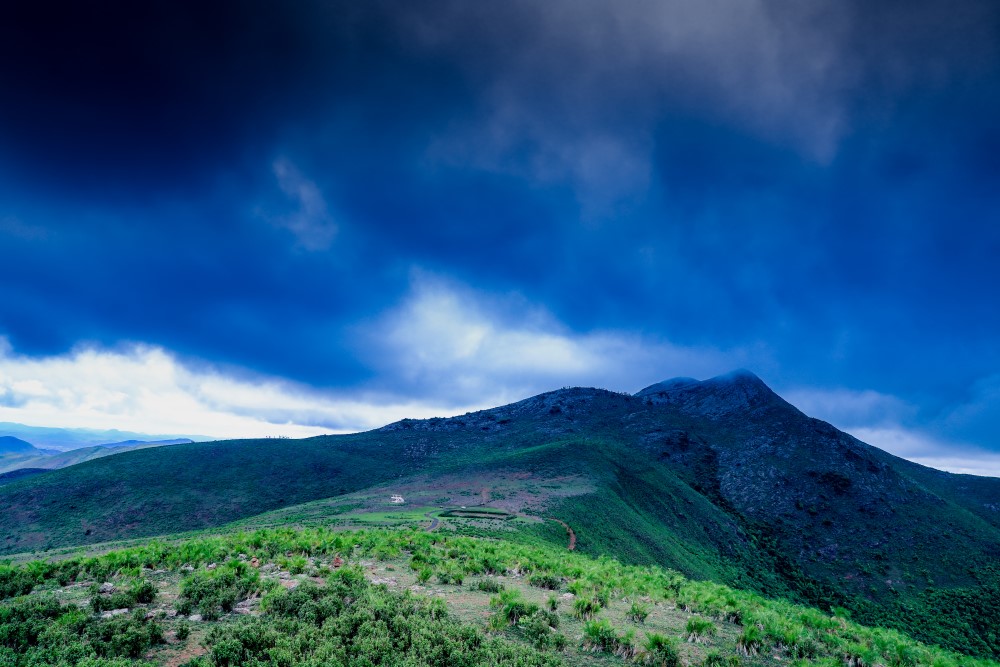
Rising above the green valleys of southern Odisha, Deomali Hills offers one of the most spectacular mountain landscapes in the Eastern Ghats. Located in Koraput district, Deomali is famous for its rolling grasslands, winding hill roads, mist-covered valleys and panoramic views that stretch across the surrounding countryside.
At approximately 1,672 metres (5,486 feet) above sea level, Deomali is widely recognized as the highest mountain peak in Odisha.
Unlike the crowded hill stations of India, Deomali attracts travellers looking for peaceful landscapes, mountain photography, scenic drives and opportunities to explore the lesser-known beauty of southern Odisha.
The journey to Deomali is an experience in itself. As the road climbs through the hills, the scenery changes from agricultural fields and rural settlements to open mountain slopes and sweeping views of the valleys below.
For travellers exploring Koraput, Jeypore and the cultural regions of southern Odisha, Deomali can be a rewarding addition to a longer itinerary.
This Deomali Hills travel guide covers everything you need to know about the destination, including its location, best time to visit, how to reach, sightseeing opportunities, trekking, safety precautions and nearby attractions.
Where Are Deomali Hills Located?
Deomali Hills is located in the Pottangi area of Koraput district, southern Odisha, within the Eastern Ghats mountain range.
The destination is known for its elevated grasslands, scenic hill roads and expansive views of the surrounding landscape.
Deomali is commonly visited from Koraput, Semiliguda and Jeypore.
Quick Facts About Deomali Hills
| Information | Details |
|---|---|
| Location | Koraput district, Odisha |
| Mountain range | Eastern Ghats |
| Elevation | Approximately 1,672 metres |
| Famous for | Odisha’s highest peak, mountain views, scenic drives and photography |
| Distance from Koraput | Approximately 60 km by road |
| Best time to visit | October to March for generally comfortable weather |
| Ideal visit duration | Around 2–4 hours at the destination |
| Nearest major travel bases | Koraput, Semiliguda and Jeypore |
Road distances and travel times vary according to the exact starting point, route and current conditions.
Explore: Koraput Tribal Tourism Guide
Why Is Deomali Famous?
Deomali is best known for being the highest mountain peak in Odisha.
However, its appeal goes far beyond its elevation.
The mountain landscape offers a combination of open grasslands, dramatic valleys, winding roads and changing weather conditions.
1. Odisha’s Highest Mountain Peak
Deomali is a major geographical landmark in the state.
Its elevated location provides sweeping views of the Eastern Ghats.
2. Beautiful Mountain Landscapes
The surrounding hills create a striking natural setting, particularly during the greener months following the monsoon.
3. Mist and Cloud-Filled Valleys
Under suitable weather conditions, clouds and mist may gather around the hills and valleys.
These conditions can create memorable views, especially during the cooler months.
4. Scenic Mountain Roads
The journey towards Deomali includes winding roads and changing elevations.
For many travellers, the drive is as enjoyable as the destination itself.
5. Photography and Nature Experiences
The open landscapes make Deomali appealing to photographers, nature enthusiasts and travellers seeking quiet outdoor experiences.
Best Things to Do at Deomali Hills
1. Enjoy the Panoramic Views from Deomali
The main attraction at Deomali is the surrounding mountain scenery.
From suitable viewpoints, visitors can enjoy views of rolling hills, open slopes and distant valleys.
The landscape changes throughout the day as sunlight, clouds and mist move across the mountains.
On clear days, the views can extend across large sections of the surrounding Eastern Ghats.
Photography Tip
A wide-angle lens is useful for capturing the open landscapes.
Early morning and late-afternoon light can be particularly attractive, although visibility depends on the weather.
Stay within safe and permitted viewing areas.
2. Experience Sunrise at Deomali
Sunrise is one of the most popular experiences associated with Deomali.
On suitable mornings, the first sunlight illuminates the hills and valleys.
Mist may remain in lower areas, creating a dramatic contrast with the mountain ridges.
However, a clear sunrise or a sea of clouds cannot be guaranteed.
Weather conditions can change quickly.
Important Sunrise Advice
Confirm the current opening hours before planning an early-morning visit.
Arrange a reliable vehicle and experienced driver.
Avoid travelling on unfamiliar hill roads in darkness if conditions are unsafe.
Carry warm clothing because the hilltop can be noticeably cooler than lower areas.
3. Take a Scenic Drive Through the Eastern Ghats
The road journey towards Deomali is one of the highlights of visiting the region.
Travellers pass through a changing landscape of rural settlements, agricultural fields, wooded areas and mountain slopes.
As the road climbs, the views become increasingly expansive.
The final approach includes winding sections that require careful driving.
Travel Tip
Use a well-maintained vehicle and allow enough time for the journey.
Do not stop on narrow bends or obstruct the road while taking photographs.
4. Explore the Open Grassland Landscape
Deomali is known for its broad, grassy mountain slopes.
These open spaces give the area a distinctive appearance compared with heavily forested hill destinations.
Visitors can enjoy short walks in suitable public areas, depending on weather and local access conditions.
Avoid walking near steep edges, especially during misty or wet conditions.
5. Enjoy Nature and Landscape Photography
Deomali offers opportunities to photograph:
- Rolling mountain ridges.
- Green valleys.
- Mist-covered hills.
- Winding mountain roads.
- Open grasslands.
- Changing cloud formations.
- Sunrise and sunset light.
For photographers, the most rewarding images often come from observing how the landscape changes rather than rushing between viewpoints.
Do not use drones without verifying applicable aviation rules and local restrictions.
6. Trekking and Short Walks
Deomali is associated with trekking and mountain walks.
However, the difficulty depends on the route, weather and exact starting point.
Some visitors may be satisfied with a short walk from a vehicle-accessible viewpoint, while others may prefer a longer guided hike.
Before Trekking
Check whether the proposed trail is open.
Use a knowledgeable local guide for unfamiliar routes.
Wear shoes with reliable grip.
Carry drinking water.
Avoid isolated trails during poor weather.
Do not assume that every visible path is an authorized trekking route.
7. Enjoy the Peaceful Mountain Atmosphere
One of Deomali’s greatest attractions is the feeling of openness.
The mountain landscape provides an opportunity to enjoy nature away from the busiest tourist centres.
Visitors who prefer slow travel may simply spend time appreciating the scenery and fresh mountain air.
However, Deomali can become busy during weekends, holidays and popular sunrise periods.
Best Time to Visit Deomali Hills
Deomali can be visited in different seasons, but weather conditions significantly influence the experience.
For most travellers, October to March is a practical period to consider.
October to November – Green Landscapes
Following the monsoon, the surrounding hills are often green.
The weather may be pleasant for sightseeing, although occasional rain and cloud cover are possible.
This period can be particularly attractive for landscape photography.
December to February – Cool Weather and Mist
Winter is one of the most popular periods for visiting Deomali.
The cooler weather makes outdoor sightseeing comfortable during much of the day.
Early mornings can be cold and misty.
On some days, cloud formations create dramatic views across the valleys.
March – Pleasant Mornings
March can still be suitable for visiting Deomali.
However, temperatures generally begin to rise as summer approaches.
Early-morning visits may be more comfortable than midday sightseeing.
April to June – Summer
Summer can bring warmer daytime conditions.
The exposed hilltop offers limited shade in some areas.
Carry sufficient water, sun protection and suitable clothing.
July to September – Monsoon
The monsoon transforms the surrounding landscape into a lush green environment.
However, heavy rain, strong winds, slippery surfaces and poor visibility can make sightseeing more difficult.
Road conditions should be checked carefully.
Avoid trekking during unsafe weather.
Which Month Is Best for Deomali?
For a combination of comfortable weather, scenery and practical road travel, November to February is a strong choice.
If your priority is especially green landscapes, the period immediately after the monsoon may also be attractive.
Deomali Sunrise vs Sunset: Which Is Better?
Both sunrise and sunset can offer beautiful views, but the experience is different.
| Sunrise | Sunset |
|---|---|
| Cooler morning conditions | Warmer late-afternoon light |
| Chance of valley mist | Attractive golden-hour landscapes |
| Requires an early departure | Easier to include in some daytime itineraries |
| Visibility depends on morning weather | Requires careful planning for the return journey |
Our Recommendation
Sunrise is particularly appealing to landscape photographers, provided current access rules allow the visit and road conditions are safe.
Sunset can also be beautiful, but visitors should allow enough time to descend before the permitted closing time and avoid unsafe night driving.
Always check current access hours rather than relying on older online travel advice.
How to Reach Deomali Hills
Deomali is most conveniently explored by road.
The best approach depends on where you are staying and how the visit fits into your wider Koraput itinerary.
From Koraput
Koraput is one of the most practical starting points.
Deomali is approximately 60 km from Koraput by the commonly used road route.
The journey generally passes through the Semiliguda–Kunduli side of the region, although local diversions or alternative approaches may apply.
Allow additional time for winding roads, stops and changing conditions.
From Jeypore
Jeypore is another suitable base.
Travellers can arrange a private vehicle to visit Deomali as part of a day excursion.
The journey is longer than from Koraput, so an early departure may be helpful.
Read: Jeypore Travel Guide
From Semiliguda
Semiliguda is a convenient approach point for Deomali.
Travellers staying in this area may have a shorter journey than those starting from Jeypore.
From Visakhapatnam
Visitors arriving through Visakhapatnam can include Deomali in a multi-day southern Odisha itinerary.
The route can be combined with Koraput, Jeypore and other destinations.
From Bhubaneswar
Deomali is too far from Bhubaneswar for a comfortable conventional day trip.
Travellers starting in Bhubaneswar should plan an overnight journey or include Deomali within a longer Odisha tour.
Is Public Transport Available to Deomali?
Public transport may connect nearby towns, but reaching the hilltop can be difficult without a private vehicle.
For international travellers, a prearranged car with an experienced local driver is generally the most practical option.
Read: How to Reach Tribal Odisha
Deomali Hills Entry Fee and Visiting Hours
According to Odisha Tourism’s published destination information, Deomali is listed with free entry and visiting hours of 5:00 AM to 6:00 PM.
However, local authorities may revise access hours, traffic rules, parking arrangements or restrictions.
Before Visiting
Confirm the latest opening hours.
Check whether any parking or other local charges apply.
Ask whether particular viewpoints or trekking routes are accessible.
Verify road conditions after heavy rainfall or maintenance work.
Do not assume that overnight camping or after-hours access is permitted.
For current destination information, consult the official Odisha Tourism website or local authorities.
Is Deomali Trekking Difficult?
Deomali offers different levels of outdoor activity.
A visit to a road-accessible viewpoint is not the same as undertaking a trek to the highest point.
For Casual Visitors
Travellers can enjoy mountain scenery without committing to a long hike.
The amount of walking required depends on the viewpoint and current access arrangements.
For Trekking Enthusiasts
Longer walks may involve grassy slopes, uneven terrain and exposed mountain conditions.
Important Safety Considerations
Weather can change quickly.
Strong winds may make exposed areas uncomfortable or unsafe.
Mist can reduce visibility.
Wet grass and rocks may be slippery.
Some slopes are steep and should not be approached casually.
Choose an activity appropriate to your fitness and experience.
Can You Camp at Deomali Hills?
Deomali is frequently associated with camping and outdoor adventure in travel promotions.
However, overnight camping should not be assumed to be permitted.
Rules may depend on the location, current government orders, environmental restrictions and whether an authorized operator is involved.
Travellers interested in camping should confirm:
- Whether camping is currently allowed.
- Which locations are approved.
- Whether advance permission is required.
- Whether toilet and waste-management facilities are available.
- What safety arrangements are in place.
Do not set up an unauthorized campsite or light a fire on the hilltop.
For most visitors, staying in Koraput, Semiliguda or Jeypore and making a daytime excursion is a simpler option.
Places to Visit Near Deomali Hills
Deomali can be combined with several attractions in the wider Koraput region.
1. Koraput Town
Koraput is known for its scenic setting and the Sabara Srikhetra Jagannath Temple.
The town also provides accommodation and transport connections.
2. Kunduli Weekly Market
Kunduli is an important weekly market in the Koraput region.
It is traditionally held on Friday.
The market is a functioning centre of local trade where agricultural produce and everyday goods are sold.
Visitors should observe respectfully and confirm the current market schedule.
Read: Kunduli Tribal Market
3. Jeypore
Jeypore is a convenient base for exploring southern Odisha’s cultural attractions.
It is particularly useful for travellers planning excursions towards Onukadelli, Kotpad and other regional destinations.
4. Kotpad Handloom Weaving
Kotpad is known for its traditional textiles and natural dyeing techniques.
A weaving workshop visit can add an important cultural dimension to a Koraput itinerary.
Workshop access should be arranged in advance.
Read: Kotpad Handloom Odisha
5. Duduma Waterfall
Duduma Waterfall is a major natural attraction in southern Odisha.
It can be included in a longer itinerary, although it is not necessarily a convenient addition to a short Deomali excursion.
Allow sufficient travel time.
6. Nandapur
Nandapur is associated with the historical and cultural heritage of the wider Koraput region.
It may be included in a regional sightseeing itinerary depending on your interests.
Deomali Hills and the Cultural Landscape of Southern Odisha
Although Deomali is primarily a nature destination, it lies within a culturally diverse region.
The wider Koraput district is home to communities including Paraja, Gadaba, Bhumia and others.
Agriculture, local markets, traditional crafts and seasonal celebrations contribute to the region’s cultural heritage.
For travellers interested in indigenous cultures, Deomali can be included as a scenic stop during a longer cultural journey.
However, nearby villages should never be treated as automatically accessible tourist attractions.
Any cultural visit should respect local preferences, privacy and applicable rules.
Explore: Tribal Villages of Odisha
Read: Responsible Tribal Tourism in Odisha
Suggested One-Day Deomali Hills Itinerary from Koraput
A one-day excursion is suitable for travellers who want to enjoy the mountain landscape without rushing.
Morning – Depart from Koraput
After breakfast, depart for Deomali in a private vehicle.
Travel through the surrounding countryside and hill roads.
Stop at safe, permitted viewpoints where appropriate.
Late Morning – Explore Deomali Hills
Spend time enjoying the panoramic views, open grasslands and mountain scenery.
Take photographs from safe locations.
If conditions allow, enjoy a short walk in an accessible area.
Afternoon – Return via Regional Attractions
After visiting Deomali, return towards Koraput.
Depending on the route and available time, include a suitable local stop.
Have lunch at a suitable restaurant or carry food if facilities are limited.
Evening – Return to Koraput
Return to your hotel and spend the evening at leisure.
Overnight: Koraput or onward travel according to your itinerary.
Suggested 2-Day Deomali and Koraput Tour
Travellers with two days can combine Deomali with additional regional sightseeing.
Day 1 – Arrival in Koraput and Local Sightseeing
Arrive in Koraput and check into your hotel.
Visit the Sabara Srikhetra Jagannath Temple and explore selected local attractions.
Enjoy the surrounding hill scenery.
Overnight: Koraput.
Day 2 – Deomali Hills and Departure
Depart for Deomali at a suitable time.
Explore the viewpoints and mountain landscape.
Return to Koraput or continue towards Jeypore or another destination.
This itinerary can be adapted for sunrise photography if the current access rules and travel conditions permit.
How to Include Deomali in an Odisha Tribal Tour
For international travellers, Deomali can be a refreshing nature experience between cultural visits.
A longer southern Odisha itinerary may follow:
Bhubaneswar → Rayagada → Chatikona → Jeypore → Onukadelli → Kunduli → Koraput → Deomali → Departure
This route connects important cultural regions with one of Odisha’s most scenic mountain destinations.
The itinerary should be arranged around weekly market days and realistic travel distances.
Why Include Deomali?
It offers a different experience from markets and village-region visits.
The open landscapes provide opportunities for nature photography.
It introduces travellers to the geography of the Eastern Ghats.
It can be combined with other Koraput attractions.
Recommended Tour Duration
A seven- to ten-day southern Odisha journey may provide enough flexibility to include Deomali, depending on the starting city, other destinations and travel pace.
Explore: Odisha Tribal Tour Packages
Read: Odisha Tribal Tour Itinerary Guide
Important Travel Tips for Deomali Hills
Before visiting Deomali, keep these practical recommendations in mind.
1. Check the Weather
Cloud cover, rain and strong winds can affect visibility and safety.
2. Confirm Access Hours
Do not assume that sunrise, sunset or overnight access is always available.
3. Wear Comfortable Footwear
Choose shoes suitable for uneven and potentially slippery surfaces.
4. Carry Drinking Water
Do not depend on shops being open at the hilltop.
5. Bring a Light Jacket
Even when lower areas are warm, the hilltop can feel cool or windy.
6. Avoid Dangerous Photography Locations
Do not stand near steep drops or unstable edges.
7. Use a Reliable Vehicle
The winding mountain approach requires careful driving.
8. Keep the Landscape Clean
Carry your rubbish back with you and avoid single-use plastic where possible.
9. Respect Local Communities
Ask permission before photographing people or entering private spaces.
10. Avoid Unapproved Adventure Activities
Trekking, camping, paragliding and similar activities should only be undertaken where currently permitted and with appropriate safety arrangements.
For more advice, read our 15 Essential Odisha Tribal Travel Tips.
Frequently Asked Questions About Deomali Hills
Where are Deomali Hills located?
Deomali Hills is located in the Pottangi area of Koraput district in southern Odisha, India.
Why is Deomali famous?
Deomali is famous for being Odisha’s highest mountain peak and for its scenic landscapes, grasslands, mountain roads and panoramic viewpoints.
What is the height of Deomali Hills?
Deomali is widely recorded at approximately 1,672 metres, or 5,486 feet, above sea level.
How far is Deomali from Koraput?
Deomali is approximately 60 km from Koraput by the commonly used road route.
What is the best time to visit Deomali?
October to March is generally suitable, with November to February especially popular for cool weather and mountain scenery.
Is Deomali good for sunrise?
Yes. Deomali is known for sunrise views, although weather and current access rules determine whether an early-morning visit is practical.
Is there an entry fee for Deomali?
Odisha Tourism currently lists free entry, but local charges or access arrangements may change.
What are the visiting hours for Deomali?
Odisha Tourism lists 5:00 AM to 6:00 PM. Confirm current timings before visiting.
Can I reach Deomali by car?
The destination can be approached by road, although the exact accessible point and road conditions may vary.
Is trekking available at Deomali?
Trekking and mountain walks are associated with Deomali, but routes, difficulty and access conditions vary.
Is camping allowed at Deomali?
Do not assume that camping is permitted. Confirm current rules and use authorized arrangements where available.
Can I visit Deomali from Jeypore?
Yes. Deomali can be included as a day excursion from Jeypore with suitable transport and time.
Can Deomali be included in an Odisha tribal tour?
Yes. It can be added to a Koraput-focused cultural itinerary as a scenic nature excursion.
Explore Deomali Hills with Odisha Tribal Trails
Deomali Hills is one of southern Odisha’s most rewarding destinations for travellers who appreciate mountain landscapes, scenic drives and peaceful natural surroundings.
As the highest peak in Odisha, Deomali offers a memorable opportunity to experience the beauty of the Eastern Ghats.
Whether you are planning a short visit from Koraput or including Deomali in a longer journey through southern Odisha, careful planning will help you enjoy the destination comfortably and safely.
At Odisha Tribal Trails, we organize private and customizable cultural journeys through Koraput, Jeypore, Rayagada, Malkangiri and other regions of Odisha.
Our itineraries can combine cultural destinations, weekly markets, traditional crafts and scenic attractions such as Deomali Hills.
Discover the natural beauty and cultural diversity of southern Odisha at your own pace.