
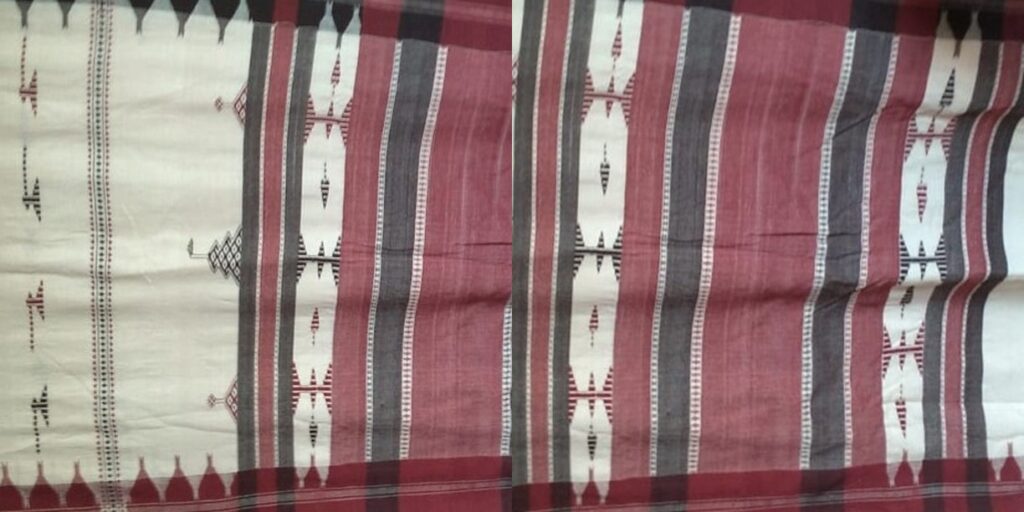
In the southern part of Odisha, surrounded by the cultural landscapes of Koraput district, lies Kotpad, a small town with a remarkable textile heritage. Known for its traditional weaving techniques, earthy colours and natural dyes, Kotpad handloom is one of the most distinctive craft traditions of Odisha.
Unlike brightly coloured commercial textiles, traditional Kotpad fabrics are recognized for their deep maroon, reddish-brown, black and off-white shades. Their geometric motifs, handwoven textures and carefully prepared natural dyes reflect generations of knowledge preserved by local weaving families.
Kotpad weaving is particularly associated with the Mirgan weaving community, whose artisans have maintained a tradition of producing textiles for communities across southern Odisha and neighbouring regions.
For travellers exploring Koraput, Jeypore and the tribal cultural regions of southern Odisha, Kotpad offers an opportunity to discover a living craft tradition. A thoughtfully arranged visit can introduce visitors to traditional looms, dye preparation, regional textile patterns and the people behind the finished fabrics.
This guide explores the history of Kotpad handloom, its natural dyeing process, traditional designs, what to buy, where to visit and how to include Kotpad in an Odisha cultural tour.
Where Is Kotpad Located in Odisha?
Kotpad is a town in Koraput district, southern Odisha, situated in a region known for its cultural diversity, agricultural landscapes and traditional craftsmanship.
It lies within reach of Jeypore, making it a possible excursion for travellers staying in the town.
The wider Koraput region is home to several indigenous and artisan communities, each contributing to its distinctive cultural heritage.
Kotpad’s weaving tradition has developed within this diverse regional environment, where textiles have historically been connected with everyday clothing, cultural identity and local trade.
Why Visit Kotpad?
Travellers interested in cultural heritage may visit Kotpad to:
- Learn about traditional handloom weaving.
- Understand natural dyeing techniques.
- Meet local artisans through appropriately arranged visits.
- Discover the distinctive colours and motifs of Kotpad fabrics.
- Purchase genuine handmade textiles.
- Explore the wider cultural heritage of Koraput.
Kotpad is particularly suitable for visitors who prefer meaningful craft experiences rather than conventional sightseeing alone.
Related reading: Koraput Tribal Tourism Guide
What Is Kotpad Handloom?
Kotpad handloom is a traditional textile weaving craft associated with the Kotpad region of Odisha.
Its defining features include handwoven cotton fabric, characteristic geometric designs and a traditional natural dyeing process.
The weaving is especially associated with the Mirgan community, whose artisans have developed specialist knowledge of yarn preparation, dyeing and textile production.
Historically, Kotpad textiles were produced for use by communities in the surrounding region.
Different textiles could serve different purposes, including clothing and customary uses.
Today, the craft includes both traditional fabrics and contemporary products designed for wider markets.
What Makes Kotpad Handloom Unique?
Several characteristics distinguish Kotpad textiles from other Indian handloom traditions.
Natural colours: Traditional fabrics use earthy shades produced through a specialized dyeing process.
Handwoven construction: The fabric is woven on looms using techniques that require experience and precision.
Geometric motifs: Patterns often feature strong shapes and arrangements characteristic of the regional weaving tradition.
Cultural associations: The craft developed in relation to the clothing needs and traditions of communities in southern Odisha.
Artisan knowledge: The dyeing and weaving processes involve skills passed between generations.
Kotpad handloom is not simply a decorative textile. It is part of Odisha’s living craft heritage.
The History and Cultural Heritage of Kotpad Weaving
Kotpad weaving has longstanding connections with the Mirgan community and the wider cultural landscape of southern Odisha.
Traditionally, weaving families produced textiles for communities living in Koraput and neighbouring regions.
The fabrics were valued for their durability, colours and distinctive designs.
The craft was shaped by local materials, the availability of natural dyes and the requirements of regional customers.
Over time, Kotpad textiles became increasingly recognized beyond their traditional markets.
Interest from designers, craft researchers and handloom enthusiasts helped introduce the weaving tradition to a wider audience.
Today, Kotpad handloom represents both a historical craft and a contemporary livelihood.
A Living Tradition, Not a Museum Exhibit
It is important to understand that Kotpad artisans are contemporary craftspeople.
Their work continues to evolve in response to changing markets, available materials and customer preferences.
Some artisans produce traditional textiles, while others develop newer products and designs.
Respectful cultural tourism should recognize both the heritage and present-day realities of the weaving community.
Kotpad Natural Dye: The Secret Behind Its Earthy Colours
One of the most fascinating aspects of Kotpad handloom is its traditional natural dyeing process.
Kotpad fabrics are particularly associated with red and maroon shades derived from the aal plant, commonly identified as Morinda citrifolia.
The roots of this plant are used in the preparation of traditional dyes.
Producing the characteristic colours involves much more than simply soaking yarn in plant extract.
How Are Kotpad Natural Dyes Prepared?
The exact process can vary between artisans, but traditional dyeing generally involves several stages.
Step 1: Preparing the Yarn
Cotton yarn is prepared before dyeing.
Cleaning and other preliminary treatments help ready the fibres for the colouring process.
Step 2: Preparing the Dye Material
The dye-bearing plant material is processed to extract or release the colouring compounds.
Traditional knowledge plays an important role in selecting and preparing suitable materials.
Step 3: Treating the Yarn
The yarn undergoes repeated treatments and dyeing stages to develop the required colour.
Depending on the technique, these may involve washing, soaking, heating or other preparation methods.
Step 4: Drying and Colour Development
The dyed yarn is dried and prepared for weaving.
Obtaining a consistent shade requires experience, especially when working with natural materials.
Step 5: Weaving the Fabric
Once the yarn is ready, it can be arranged on the loom and woven into the required textile.
The entire process can be labour-intensive, and production time varies according to the product and technique.
Why Are Kotpad Colours So Distinctive?
Natural dyeing produces the muted, earthy palette for which Kotpad is known.
These colours are part of the craft’s visual identity.
However, buyers should not assume that every textile sold under the Kotpad name uses exclusively natural dyes.
If natural dyeing is important to you, ask the artisan or seller about the materials and process used for the particular item.
Traditional Colours and Motifs of Kotpad Handloom
Kotpad textiles are recognizable for their restrained colour palette and bold designs.
Traditional Colours
Commonly associated shades include:
- Deep maroon.
- Reddish brown.
- Rust and earthy red.
- Black.
- Off-white or natural cotton tones.
The precise shade depends on the materials, dyeing method and production conditions.
Traditional Motifs
Kotpad weaving often features geometric designs and patterned borders.
Motifs may be influenced by the wider cultural environment and the preferences of the communities for whom the fabrics were traditionally made.
However, it is important not to assign a fixed symbolic meaning to every motif without reliable documentation or explanation from knowledgeable artisans.
Why These Designs Matter
The patterns help distinguish Kotpad textiles from other weaving traditions.
They also reflect the creativity and technical skill involved in arranging yarn and producing designs on a loom.
For travellers, watching the weaving process can make these details easier to appreciate.
The Mirgan Weaving Community of Kotpad
The Mirgan community is central to the history of Kotpad handloom.
Generations of weaving families have developed knowledge of natural dyeing, loom operation and textile design.
Traditional weaving involves several stages of work, from preparing yarn to finishing the fabric.
Different family members or artisans may participate in different parts of the process.
The Importance of Artisan Knowledge
Many techniques require experience that cannot be fully understood simply by looking at a finished textile.
Artisans learn how materials behave, how colours develop and how to maintain consistent patterns during weaving.
Such knowledge is an important part of the region’s cultural heritage.
Challenges Facing Traditional Weaving
Like many traditional crafts, Kotpad weaving faces challenges related to production costs, competition, changing consumer preferences and the availability of skilled labour.
Natural dyeing can require substantial time and effort.
Supporting genuine handmade products and appropriately compensated craft experiences can help sustain artisan livelihoods.
Respecting the Artisans
A weaving workshop is a place of work.
Visitors should arrange appointments where possible, respect working hours and avoid interrupting production.
Photography and demonstrations should take place only with the artisan’s permission.
What Products Are Made from Kotpad Handloom?
Although Kotpad is strongly associated with traditional textiles, artisans and weaving groups also produce products for contemporary buyers.
1. Kotpad Sarees
Kotpad sarees are among the best-known products associated with the weaving tradition.
They often feature characteristic earthy colours, woven borders and geometric patterns.
A genuine handmade saree can reflect considerable time and skill.
2. Kotpad Shawls
Shawls are another important product.
They may feature traditional patterns and the natural colour palette associated with the craft.
3. Kotpad Dupattas and Stoles
These products can be practical choices for travellers looking for smaller handmade textiles.
They are often easier to carry than larger fabrics.
4. Kotpad Dress Materials
Some weaving units produce fabric suitable for garments and contemporary clothing.
5. Contemporary Textile Products
Depending on the producer, visitors may encounter scarves, accessories or home-textile products.
Not every weaving workshop makes every type of product.
Availability should be confirmed with the artisan or seller.
Kotpad Handloom and Its Geographical Indication Recognition
Kotpad Handloom Fabric has Geographical Indication (GI) registration in India.
GI recognition identifies a product associated with a particular geographical origin and recognized characteristics or reputation.
For Kotpad, this recognition helps distinguish the regional weaving tradition from unrelated textile products.
Why GI Recognition Matters
It supports recognition of the craft’s geographical identity.
It helps preserve awareness of traditional production knowledge.
It can assist consumers in identifying the regional origin of products.
It also highlights the cultural importance of Kotpad weaving within India’s wider handloom heritage.
Does GI Recognition Guarantee Authenticity?
Not automatically.
A seller’s claim that a textile is Kotpad handloom should still be assessed carefully.
Buyers can ask about the weaving unit, production location, materials and applicable authenticity documentation.
A genuine product should have a credible connection with the recognized craft tradition.
Kotpad Handloom vs Other Traditional Textiles of Odisha
Odisha has several important weaving traditions, and Kotpad is only one of them.
Different textile regions are known for different materials, patterns and techniques.
| Textile tradition | Region | Distinctive characteristic |
|---|---|---|
| Kotpad Handloom | Koraput | Earthy colours and traditional natural dyeing |
| Sambalpuri Ikat | Western Odisha | Resist-dyed yarn patterns |
| Bomkai Textiles | Odisha | Distinctive woven borders and motifs |
| Berhampuri Patta | Berhampur | Traditional silk weaving |
| Kapdaganda | Niyamgiri region | Dongria Kondh embroidered shawls |
Kotpad should not be confused with Kapdaganda.
Kotpad is a handloom weaving tradition associated particularly with Mirgan artisans, while Kapdaganda is a distinctive embroidered textile associated with the Dongria Kondh community.
Both are important parts of Odisha’s cultural heritage, but their techniques and community associations are different.
Read: Tribal Handicrafts of Odisha
Can Tourists Visit Kotpad Weaving Workshops?
Travellers interested in handloom traditions may be able to visit weaving centres or workshops in the Kotpad area.
However, access depends on the artisan, workshop arrangements and availability.
Not every workshop is open for unscheduled visits.
What Can You Experience During a Visit?
Depending on the arrangements, visitors may have an opportunity to:
Observe traditional weaving: Learn how yarn is arranged and fabric is woven on a loom.
Understand natural dyeing: Hear about the preparation and use of traditional dyes.
Explore textile designs: Discover the patterns and colours associated with Kotpad.
Meet artisans: Learn about the work involved in producing handmade textiles.
Purchase authentic products: Buy directly from a participating artisan or recognized seller when products are available.
A complete dyeing demonstration may not be possible during every visit because some stages take considerable time.
How Much Time Should You Allow?
A short visit may provide an introduction to the craft, while a more detailed experience requires additional time and prior arrangements.
If Kotpad is one of your main interests, avoid scheduling too many distant attractions on the same day.
Where to Buy Authentic Kotpad Handloom in Odisha
Visitors can explore several purchasing options.
Kotpad Weaving Centres
Buying from participating artisans in the Kotpad region can provide a direct connection to the maker.
It also gives visitors an opportunity to ask about the textile’s production process.
Artisan Cooperatives and Weaving Groups
Where available, recognized cooperatives and producer groups may offer handmade products from local weavers.
Government Handloom Outlets
Established Odisha handloom retail networks may stock Kotpad textiles.
Availability varies by outlet.
Craft Exhibitions
Handloom exhibitions and craft fairs sometimes feature Kotpad products.
These can be useful for travellers who cannot visit Koraput.
What to Ask Before Buying
- Was this fabric handwoven?
- Where was it made?
- Who produced it?
- Were natural dyes used?
- What material is the fabric made from?
- Are there specific care instructions?
- Is any authenticity documentation available?
Avoid relying solely on the product name or a seller’s verbal claim.
How to Identify Genuine Kotpad Handloom
Recognizing authentic handloom textiles requires more than checking the colour.
Traditional Kotpad products are associated with distinctive weaving techniques, designs and dyeing knowledge.
Check the Source
Purchasing through a known artisan, producer group or reputable handloom outlet is a useful starting point.
Ask About the Dye
If the product is described as naturally dyed, ask which materials were used.
Examine the Weaving
Handwoven fabrics may show characteristics of manual production, although appearance alone is not a reliable authentication test.
Ask About the Maker
A trustworthy seller should be able to provide meaningful information about the origin of the textile.
Compare Prices Sensibly
Traditional handloom production requires time, labour and specialist knowledge.
Very low prices may warrant additional questions about the materials and manufacturing method.
Understand Product Variations
Not all authentic products will look identical.
Artisans may create different patterns, sizes and contemporary designs while remaining connected to the Kotpad weaving tradition.
How to Reach Kotpad from Jeypore and Koraput
Kotpad can be included in a road journey through southern Odisha.
From Jeypore
Jeypore is a convenient base for a Kotpad excursion.
Travellers can arrange a private vehicle to visit the weaving area and return to Jeypore or continue towards another destination.
From Koraput
Kotpad can also be reached by road from Koraput town.
The journey should be planned according to road conditions, the location of the workshop and any additional sightseeing stops.
From Visakhapatnam
Travellers arriving in Visakhapatnam may include Kotpad as part of a wider southern Odisha route through Jeypore and Koraput.
From Bhubaneswar
Bhubaneswar is much farther away and is better treated as the starting point of a multi-day Odisha itinerary rather than a same-day Kotpad excursion.
Travel Planning Tip
Arrange the weaving visit before departure.
Workshop availability, production activity and travel conditions should be confirmed locally.
Read: Jeypore Travel Guide
Best Time to Visit Kotpad
Kotpad can be visited at different times of the year, but October to March is generally a comfortable period for travelling through Koraput district.
October to November
The countryside is often green following the monsoon, and the weather is usually suitable for road travel.
December to February
These months are particularly comfortable for cultural sightseeing and longer regional journeys.
March
Travel is still possible, although daytime temperatures may increase.
April to June
Summer can be hot, making outdoor sightseeing less comfortable.
July to September
The monsoon brings lush scenery but may also cause road delays and other travel difficulties.
Does Weaving Take Place All Year?
Artisan production schedules vary.
A workshop may be busy, closed or working on a particular stage of production during your visit.
For this reason, the best time for a craft experience depends not only on the weather but also on the artisan’s availability.
Kotpad Handloom and the Cultural Heritage of Koraput
Kotpad weaving is part of the wider cultural heritage of southern Odisha.
The Koraput region is known for its indigenous communities, agricultural traditions, local markets, traditional food and distinctive landscapes.
The Mirgan weaving tradition developed within this culturally diverse environment.
Historically, textiles were produced for communities with different clothing needs and preferences.
This relationship between weaving and regional society helps explain why Kotpad handloom is more than a commercial craft.
It is connected with the history of the region and the skills of the people who produce it.
Travellers interested in a deeper understanding of Koraput may also explore:
Tribal Culture of Odisha — Learn about the diversity of Odisha’s indigenous cultural traditions.
Traditional Tribal Food of Odisha — Discover millet preparations and regional food traditions.
Tribal Festivals of Odisha — Explore seasonal celebrations, music and dance.
Tribal Villages of Odisha — Understand responsible village visits and cultural tourism.
Combine Kotpad with Other Places to Visit Near Jeypore
A Kotpad weaving visit can be included in a broader cultural itinerary.
Jeypore
Jeypore provides accommodation and transport connections for exploring the region.
Kunduli Weekly Market
Kunduli market, traditionally held on Friday, offers an opportunity to learn about rural trade and agricultural produce.
Koraput Town
Koraput is known for its scenic setting and the Sabara Srikhetra Jagannath Temple.
Nandapur
Nandapur is associated with the historical heritage and cultural landscape of the wider Koraput region.
Onukadelli Weekly Market
Onukadelli, traditionally held on Thursday, is an important market excursion from Jeypore.
Because Kotpad, Kunduli and Onukadelli are in different directions, travellers should not assume that all can be comfortably visited in a single day.
Read: Odisha Tribal Market Circuit
Suggested 2-Day Kotpad and Jeypore Cultural Itinerary
This short itinerary is suitable for travellers particularly interested in textiles and regional culture.
Day 1 – Arrive in Jeypore and Explore Kotpad Handloom
Arrive in Jeypore and proceed towards Kotpad, subject to your arrival time.
Visit a prearranged weaving workshop or suitable artisan centre.
Learn about the history of Kotpad textiles, natural dyeing and traditional weaving techniques.
Where available, explore handmade sarees, shawls and other textile products.
Return to Jeypore for the evening.
Overnight: Jeypore.
Day 2 – Regional Market or Koraput Sightseeing
After breakfast, choose a suitable regional experience.
If the day is Friday, Kunduli weekly market may be included.
Alternatively, explore Koraput town or selected nearby attractions.
Continue to your next destination according to your travel plan.
This itinerary can be extended to include Onukadelli and Chatikona markets when the travel dates align correctly.
Suggested Kotpad Experience in a Longer Odisha Tribal Tour
For travellers interested in a comprehensive cultural journey, Kotpad can be included in a route such as:
Bhubaneswar → Rayagada → Chatikona → Jeypore → Onukadelli → Kunduli → Kotpad → Koraput → Departure
This route connects weekly markets, regional landscapes and traditional crafts.
However, the actual sequence should be adjusted according to market days, workshop availability and realistic driving times.
Village visits should only be included where permitted and welcomed.
Why Add Kotpad to Your Itinerary?
It introduces a different dimension of southern Odisha’s cultural heritage.
Rather than focusing only on markets and villages, travellers can learn about the production of a distinctive handmade textile.
A weaving-centre visit also creates opportunities to support local craftsmanship through fair purchases.
Explore: Odisha Tribal Tour Packages
Responsible Tourism Tips for Visiting Kotpad Artisans
A meaningful craft visit should respect the people whose work visitors wish to understand.
Arrange Visits in Advance
Do not assume that private workshops welcome walk-in visitors.
Respect Working Hours
Weaving is a livelihood, and demonstrations can interrupt production.
Ask Before Taking Photographs
Obtain permission before photographing artisans, looms, workspaces or detailed designs.
Pay Fairly
If a special demonstration or workshop visit is arranged, compensate the artisan appropriately.
Avoid Aggressive Bargaining
Handmade textiles reflect considerable labour and skill.
Do Not Copy Designs Without Permission
Some patterns and techniques may have important cultural or commercial significance.
Buy from Trustworthy Sources
Choose genuine products and ask about their origin.
Read: Responsible Tribal Tourism in Odisha
Frequently Asked Questions About Kotpad Handloom
What is Kotpad handloom famous for?
Kotpad handloom is famous for its traditional weaving, earthy colours, geometric designs and natural dyeing techniques associated with the Mirgan weaving community of Koraput district.
Where is Kotpad located?
Kotpad is located in Koraput district in southern Odisha, India.
Which community is associated with Kotpad weaving?
Kotpad handloom is particularly associated with the Mirgan weaving community.
What natural dye is used in Kotpad textiles?
Traditional Kotpad dyeing is especially associated with colour derived from the roots of the aal plant, commonly identified as Morinda citrifolia.
Is Kotpad handloom a GI product?
Yes. Kotpad Handloom Fabric has Geographical Indication registration in India.
What products are made from Kotpad handloom?
Products may include sarees, shawls, dupattas, stoles, dress materials and other textile items.
Can tourists visit Kotpad weaving workshops?
Visits may be possible through suitable prior arrangements. Workshop access and artisan availability should be confirmed before travelling.
How do I reach Kotpad from Jeypore?
Kotpad can be reached by road from Jeypore. A private vehicle is a practical option for travellers including a weaving visit in a cultural itinerary.
What is the best time to visit Kotpad?
October to March is generally comfortable for travel in southern Odisha. Workshop availability should be confirmed separately.
Can I buy authentic Kotpad sarees directly from artisans?
Where artisans offer products for sale, direct purchasing may be possible. Reputable producer groups and handloom outlets are other options.
Is Kotpad handloom the same as Kapdaganda?
No. Kotpad is a handloom weaving tradition associated with Mirgan artisans, while Kapdaganda is an embroidered textile tradition associated with the Dongria Kondh community.
Can Kotpad be included in an Odisha tribal tour?
Yes. Kotpad can be included in a suitable Koraput and Jeypore cultural itinerary, subject to travel time and workshop arrangements.
Discover Kotpad Handloom with Odisha Tribal Trails
Kotpad handloom is one of the most distinctive examples of Odisha’s traditional textile heritage.
Its natural colours, skilled weaving techniques and strong connection with the Mirgan artisan community make it a fascinating subject for travellers interested in living craft traditions.
A visit to Kotpad offers more than an opportunity to purchase handmade fabric. It provides a chance to understand the time, knowledge and craftsmanship behind a regional textile tradition.
At Odisha Tribal Trails, we organize private and customizable cultural journeys through Koraput, Jeypore, Rayagada, Malkangiri and other parts of southern Odisha.
Where suitable arrangements are available, our itineraries can include traditional weaving centres, regional markets, local crafts and cultural landscapes.
Discover the people and traditions behind Odisha’s remarkable handicraft heritage.